The Used Car Inspection Checklist to Use Before You Buy
A practical checklist for inspecting a used car in Egypt: papers, chassis and engine numbers, paint, gearbox, suspension, test drive and violations.
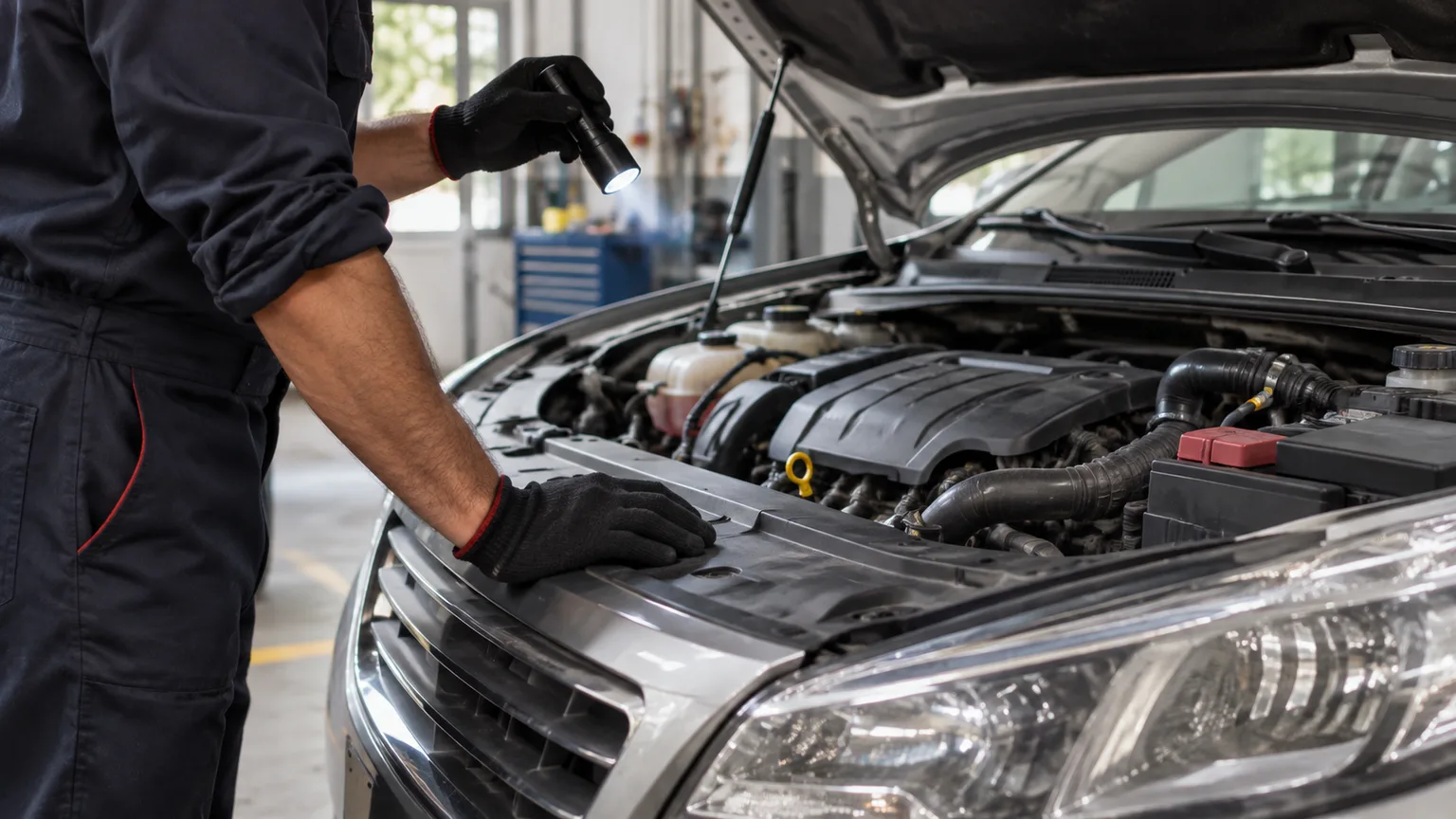
A car's looks can fool you. A good wash and a fresh respray can hide an old accident or a tired engine, and the problem only shows up after the money is paid. Take this list to the viewing and go through it before paying any deposit.
View in daylight, in a safe public place, and bring a knowledgeable friend or mechanic if you can.
1. Papers and Chassis and Engine Numbers
Start with the papers: if they fail, stop there.
- The licence is valid and the name on it is the seller's.
- The seller's ID matches the licence or the power of attorney.
- The plate number, colour, make and model are exactly as on the licence.
- The chassis and engine numbers engraved on the car are the same as on the licence. Don't know where they are? Use a technician or an inspection centre.
- No scratching out or alteration in the papers or engraved numbers.
- If the sale is by power of attorney, confirm its validity with the Real Estate Registry (الشهر العقاري).
- If the car comes with contracts rather than a licence in the seller's name, review the whole chain of owners.
2. Violations and Licence
Unpaid violations can land on you at transfer, so don't leave this until last.
- Check violations by plate number before paying. Sources mention the Public Prosecution website, the Digital Egypt platform and also the Ministry of Interior.
- Ask the seller to run the check in front of you or get a violations certificate, as the service may ask for the owner's details.
- Confirm there are no overdue taxes or fees, and no sale ban or remaining instalments on the car.
3. Body and Paint
- Look along the car from the side in daylight: any difference in paint colour or shine usually means a respray.
- The gaps between doors, bonnet and boot are even on both sides.
- The wing and bonnet bolts have not been undone and still carry original paint.
- No overspray on the rubber seals, glass or edges.
- A paint thickness gauge easily reveals filler and respray. If you don't have one, ask the inspection centre.
- Most important: the pillars and chassis. Any welding or bodywork here affects safety, and a car called "factory original" (فابريكا) with damaged pillars is not original.
- Look for rust under the pedals and in the boot, and any smell of damp or mud, which can be a sign the car was flooded.
4. Engine
- Start the engine cold. A seller who warmed the car up before you arrived may be hiding something.
- No oil or water drips under the car or around the engine.
- Normal oil colour, no foam under the oil cap.
- No heavy blue or white smoke from the exhaust.
- Steady engine sound, no knocking or ticking.
- All dashboard lights come on with the ignition and go off after starting.
- Get a computer scan (OBD), which reads stored faults that don't show up on a drive.
5. Gearbox
Gearbox repairs are among the most expensive, so give it time on the drive.
- An automatic shifts smoothly, with no jolt or delay.
- A manual engages easily, and the clutch neither bites too high nor slips.
- No gearbox oil leak under the car.
6. Suspension, Brakes and Tyres
Egyptian streets wear suspension quickly, so check this even on a clean car.
- Press down on each corner: the car should return once, without continuing to bounce.
- No knocking over speed bumps, no noise when steering.
- The tyres are worn evenly. Wear on one side can mean an alignment or suspension problem.
- Check the tyre manufacture date on the sidewall.
- The brakes are strong, with no shaking in the steering wheel under braking.
7. Test Drive
Drive it yourself if licensed, with the radio off so you can hear odd noises.
- Drive far enough on a street, and on a fast road if possible.
- The car runs straight and does not pull to one side.
- Try the air conditioning, electrics, windows, mirrors and all cabin equipment.
- Compare the odometer with the car's condition. Worn pedals and steering wheel with low mileage are a warning sign.
- After the drive, open the bonnet again and check for new leaks.
8. Independent Inspection Centre
Even if all looks fine, pay for a report from an independent centre with no link to the seller. The report covers the engine, chassis, signs of accidents and the odometer. If the seller refuses to take the car for inspection, that is reason enough to walk away. Choose the centre yourself, not necessarily the one the seller recommends. Keep a copy of the report; any fault in it is a fair point in price negotiation.
FAQ
Should I pay a deposit before the inspection?
Better not. If you must, write a clear agreement and pay in a traceable way such as a bank transfer.
How do I know the odometer has been tampered with?
Compare the reading with wear on the pedals, steering wheel and tyres, and have the inspection centre check it by computer.
What if the chassis number differs from the licence?
Stop the purchase until the reason is known. Don't rely on the seller's word, and ask the traffic department.
Does this inspection replace ownership transfer?
No. After buying, you must complete the transfer at the Real Estate Registry and the traffic department so the car is in your name.
Ready to look? On AutoEG, see cars or browse all listings.